
MYLES MORGAN - "Missin' Me Drunk" - Myles Morgan Music
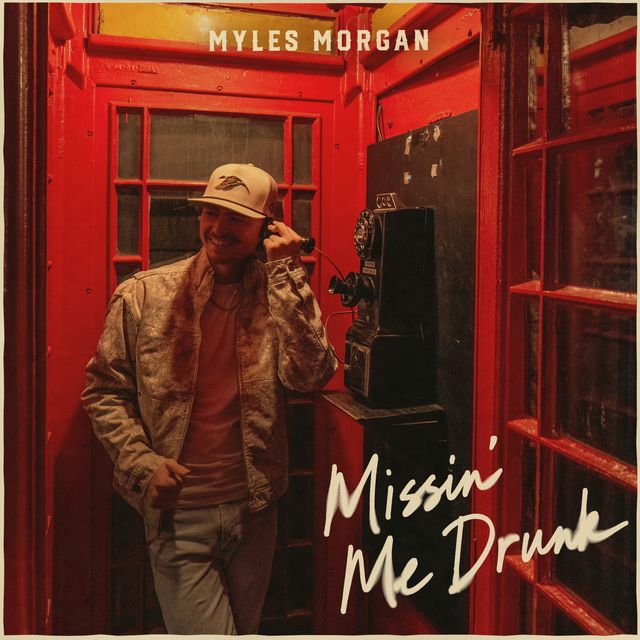
Country music has never lacked for songs about bad decisions made beneath neon lights. The genre’s bars are crowded with broken hearts, slammed doors, jealous calls, and mornings nobody wants to remember. On “Missin’ Me Drunk,” Myles Morgan walks into that familiar setting and gives it a welcome change of heart. Released September 25, 2026, the independent single keeps the drinks, the Friday-night atmosphere, and the last-call phone call, but leaves the dysfunction behind. In its place is something less dramatic and, in this case, more appealing: a relationship that feels secure, affectionate, and genuinely worth coming home to.
The hook works because Morgan does not overcomplicate it. His narrator knows the routine: his partner goes out with her friends, the level in her glass starts falling, and the night begins to loosen around the edges. Yet instead of picking a fight, disappearing until morning, or turning into the stock character from a rowdy drinking anthem, she starts thinking about the man waiting at home. The title phrase lands as both punch line and term of endearment. It is instantly understandable, easy to remember, and just unusual enough to give the song its own personality.
As a songwriter, Morgan has a sharp feel for conversational detail. A lime in a tall glass, a double on ice, a phone ringing as the evening rolls along—none of these images is especially ornate, and that is precisely why they work. They make the story feel observed rather than manufactured. Morgan also gets plenty of mileage from the contrast between bitter and sweet, using the language of drinks to describe a romance with no sour aftertaste. The writing is clever, but it rarely pauses to admire its own cleverness; the wordplay stays in service of the relationship at the center of the song.
What gives the premise weight is the narrator’s reaction. He is not boasting that he has somehow tamed a wild woman, nor is he policing her night out. He simply sounds a little amazed that, with a room full of people around her, he is still the person she wants. That note of disbelief—“the boy back home” recognizing his luck—keeps the song from feeling smug. Beneath the barroom language is a modest love song about being chosen, and Morgan delivers that idea with enough restraint to let the listener discover the tenderness for themselves.
Structurally, the song is built for the chorus to do the heavy lifting. The verses establish the scene in quick, recognizable strokes, while each return to the central phrase makes the joke feel warmer rather than merely repeated. By the final pass, the title no longer plays only as a clever label; it has become shorthand for the couple’s entire dynamic. That progression is small, but effective, and it helps the track feel complete without stretching a compact idea beyond its natural limits.
Producers Clayton Collins and Dalton Wixom understand that the title is the record’s calling card. Their work supports Morgan’s writing with the clean, direct proportions of contemporary country, keeping the story easy to follow and the payoff close at hand. Nothing in the presentation needs to elbow the lyric out of the way. The result has a polished surface, but its appeal remains homespun—the kind of track that can sit comfortably on a modern playlist without losing the casual intimacy of a story first told between friends.
That sense of ease makes even more sense in light of the song’s origin. The idea grew from a conversation about a friend’s secure long-distance relationship and the realization that not every alcohol-fueled phone call has to end in accusation or damage control. Some people simply miss the person they love. Morgan recognized the phrase hiding inside that observation and shaped it into a hook that feels both specific and broadly relatable. It is the sort of concept that sounds obvious only after somebody has written it well.
What could have been a one-joke drinking song instead becomes a compact portrait of trust. Morgan’s smartest move is recognizing that devotion can be catchy—that a healthy relationship does not have to sound dull, sanitized, or overly polished. “Missin’ Me Drunk” still has the accessibility of a barroom singalong, but its emotional destination is home rather than havoc. For an independent artist building a catalog on his own writing, it is a strong showcase of instinct: Morgan knows how to find a fresh angle inside familiar country scenery, and he knows when to let a good phrase speak for itself.
The song’s replay value ultimately comes from that balance. It is light without being disposable, sentimental without leaning too hard on sweetness, and familiar without feeling borrowed. Listeners may arrive for the title and its grin-worthy twist, but the reason to stay is the sincerity underneath it. “Missin’ Me Drunk” makes a convincing case that the best last-call story is not always the loudest one; sometimes it is simply the call that reminds you where—and with whom—you want the night to end.
(Review Written By: Dave Pierce)
Latest Updates
- Single Review: Stephen Wilson, Jr. - "Exorcisms On The Weekend"
- Single Review: Stephen Wilson, Jr. - "yellow brick home"
- #throwbackthursday: Miranda Lambert - "More Like Her"
- Single Review: Erin Kirby feat. Ryan Hurd - “Nothing is Everything”
- Single Review: Chloe Graham - “Honky Tonk Honey”
- Single Review: Dylan Marlowe - “Rock The Jukebox”
- Single Review: Caylee Hammack & Trisha Yearwood - “Coldest Shoulder”
- Single Review: Randy Travis - “I Know Where I’d Be Without You”
- Single Review: Riley Green & Peyton Manning - “Alabama Vs. Tennessee”
- Single Review: Hudson Westbrook - “Thin Ice”
- Single Review: Ashley Cooke - “Wrapped”
- Music Video: CJ Solar & the Old Souls - "First Time Caller"
- Single Review: Cody Johnson & Jay Buchanan - "Rabbit Gets A Gun"
- Music Video: Cole Goodwin - "Closer Every Day"
- Music Video: Tyler Nance - "Somethin With You"
- Music Video: William Beckmann - "You Only Love To Break My Heart"
- Lyric Video: CJ Solar & the Old Souls - “Blame It On Me”
- Music Video: Jade Eagleson and Midland - "Coming Soon To A Honky Tonk Near You"
- Visualizer: Colin Lynch - "In Due Time"
- Music Video: The Band Loula - "Other People"