
CAMERON WHITCOMB w/ MARSHMELLO - "Hollow" - Big Loud/Mercury Records
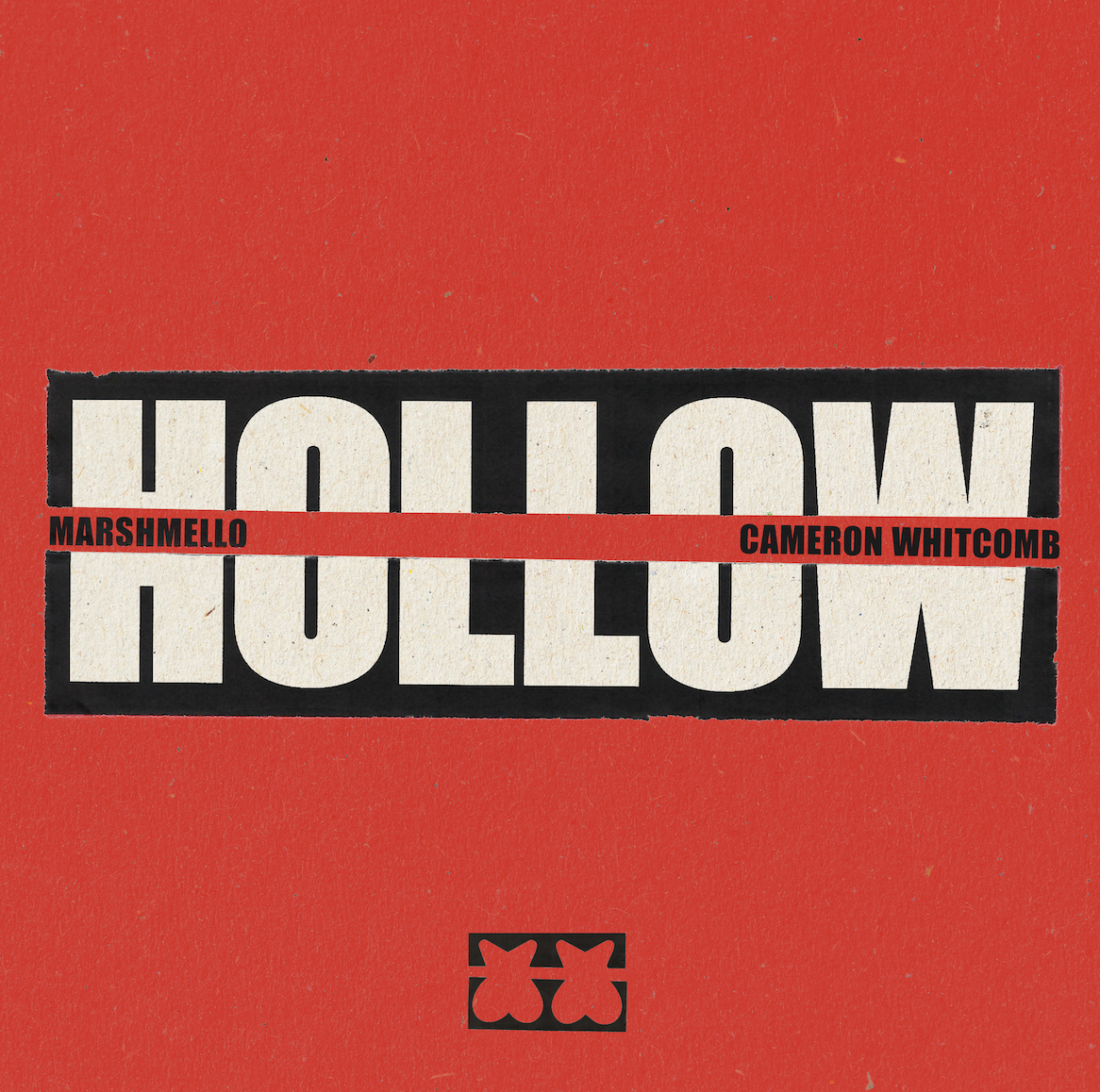
There is a particular ache that comes from knowing a relationship is already slipping away while still wanting to hold the moment in place. “Hollow,” the August 28, 2026 collaboration between Marshmello and Cameron Whitcomb, lives entirely inside that tension. Released through Mercury Records and Big Loud, the single continues Marshmello’s increasingly confident movement through country-electronic fusion, pairing his polished, festival-ready production with Whitcomb’s raw-edged vocal presence. The result is not simply an EDM track with country accents, nor a country song decorated with synths. At its best, “Hollow” feels like a genuine meeting point: intimate enough for a kitchen at midnight, expansive enough for a crowd with its hands in the air.
“Hollow” opens in a space defined by quiet discomfort. The imagery is domestic and close-range: silence, eyelids, a kitchen island, jokes tossed into the room less for humor than survival. That setting gives the song its emotional credibility before the beat ever asks for release. The narrator is not making a grand declaration from a distance; he is standing across from someone who still matters, trying to soften the unbearable awkwardness of what both people already know. The line “Take my hand, let’s dance around the truth” becomes the song’s thesis, a phrase at once romantic, evasive, and painfully recognizable.
Whitcomb’s performance is the track’s emotional center of gravity. His voice carries a worn, raspy grain that keeps the record grounded even when the arrangement brightens around him. He does not oversell the heartbreak; instead, he sings with the restraint of someone trying not to make the moment heavier than it already is. That choice matters. In a song so concerned with delay, denial, and temporary comfort, a more theatrical vocal might have tipped the track into melodrama. Whitcomb gives it texture instead — a country-folk ache that makes the lyric feel lived-in rather than merely written.
Marshmello’s production understands how to frame that ache without smoothing it away. The beat is sturdy and propulsive, built for movement, but it never fully erases the melancholy at the song’s core. Shimmering synths, a clean low-end pulse, and a chorus designed for communal lift push “Hollow” toward dancefloor catharsis, yet the song remains emotionally suspended. The production’s brightness does not contradict the sadness; it amplifies it by giving the characters somewhere to place what they cannot say. That contrast is what makes the record work: the lyric wants to stall time, while the rhythm insists that time is already moving.
The chorus supplies the song’s most memorable image: “When the light goes hollow and burns away tomorrow.” It is a striking turn of phrase because it makes morning feel less like a beginning than an erasure. Tomorrow is not merely coming; it threatens to burn through the night’s illusion and expose what remains. Against that inevitability, the refrain’s promise — “at least I’ll always have tonight with you” — lands with bittersweet force. The song’s title becomes more than a mood word. “Hollow” names the emptiness left when desire, memory, and fear occupy the same space.
As a country-electronic hybrid, the single succeeds because its two worlds are integrated rather than stacked. The storytelling has the plainspoken directness of contemporary country-pop, while the arrangement leans into the euphoric architecture of modern dance music. That balance positions “Hollow” within Marshmello’s broader country crossover streak, but it also gives Whitcomb space to sound unmistakably himself. The collaboration feels less like a branding exercise than a carefully calibrated exchange: Marshmello supplies scale, Whitcomb supplies scar tissue.
Thematically, “Hollow” is a song about emotional postponement. Its characters are not naïve; they understand the fragility of what they are holding. The lyric “If we can’t stitch together some version of forever, that’s fine” admits defeat without fully surrendering to it. The phrase is tender because it lowers the stakes from eternity to immediacy, suggesting that a single night can still matter even when the future has become unreliable. That perspective gives the song a mature sadness: it does not confuse fleeting comfort with resolution, but it refuses to dismiss comfort as meaningless.
Its most affecting idea is that avoidance can be both a flaw and a refuge. The couple “dances around the truth” because honesty would collapse the night too soon. The song does not endorse that choice so much as understand it. In the final stretch, the admission that “losing you, darling, is the only fear I know” clarifies the emotional stakes: the characters are not running from a minor disagreement, but from the grief of losing a defining connection. “Hollow” turns that fear into momentum, making the act of holding on feel temporary, desperate, and beautiful.
“Hollow” is a polished, emotionally persuasive single that finds uncommon warmth in the space between confession and collapse. It is sleek enough for pop and dance audiences, grounded enough to satisfy country-leaning listeners, and specific enough to avoid the anonymity that can haunt cross-genre experiments. Marshmello’s production gives the song lift without stripping away its ache, while Cameron Whitcomb’s vocal performance supplies the grit and vulnerability that make the premise believable. The record’s greatest strength is its contradiction: it sounds like release, but it is really about delay. In that unresolved space, “Hollow” becomes a memorable portrait of two people choosing one last night of closeness before daylight tells the truth.
(Review Written By: David Pierce)
Latest Updates
- Single Review: Stephen Wilson, Jr. - "Exorcisms On The Weekend"
- Single Review: Stephen Wilson, Jr. - "yellow brick home"
- #throwbackthursday: Miranda Lambert - "More Like Her"
- Single Review: Erin Kirby feat. Ryan Hurd - “Nothing is Everything”
- Single Review: Chloe Graham - “Honky Tonk Honey”
- Single Review: Dylan Marlowe - “Rock The Jukebox”
- Single Review: Caylee Hammack & Trisha Yearwood - “Coldest Shoulder”
- Single Review: Randy Travis - “I Know Where I’d Be Without You”
- Single Review: Riley Green & Peyton Manning - “Alabama Vs. Tennessee”
- Single Review: Hudson Westbrook - “Thin Ice”
- Single Review: Ashley Cooke - “Wrapped”
- Music Video: CJ Solar & the Old Souls - "First Time Caller"
- Single Review: Cody Johnson & Jay Buchanan - "Rabbit Gets A Gun"
- Music Video: Cole Goodwin - "Closer Every Day"
- Music Video: Tyler Nance - "Somethin With You"
- Music Video: William Beckmann - "You Only Love To Break My Heart"
- Lyric Video: CJ Solar & the Old Souls - “Blame It On Me”
- Music Video: Jade Eagleson and Midland - "Coming Soon To A Honky Tonk Near You"
- Visualizer: Colin Lynch - "In Due Time"
- Music Video: The Band Loula - "Other People"