
COLE SWINDELL - "Bronco" - Warner Records Nashville
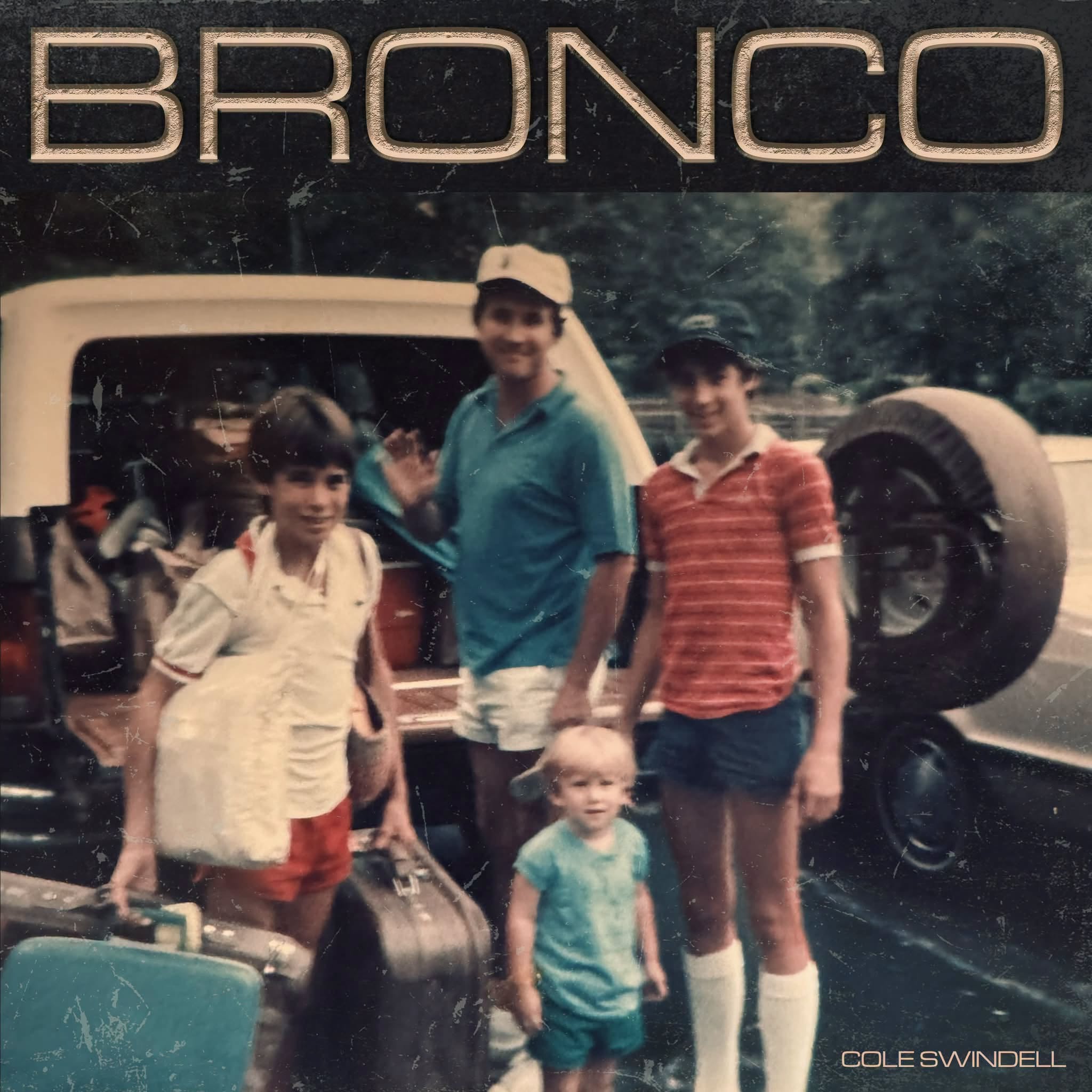
Some country songs are built around heartbreak. Others are built around celebration. “Bronco,” Cole Swindell’s latest release, manages to find the sweet spot between the two. Released August 21, 2026, via Warner Records Nashville, the upbeat new single transforms a treasured piece of family history into a nostalgic, feel-good anthem—one that carries genuine emotional weight without ever losing its summer-ready energy.
The story behind “Bronco” is almost as compelling as the song itself. Swindell was looking through an old photograph when he came across an image of himself and his brothers standing beside their late father Keith’s Ford Bronco. What might have been a fleeting moment of nostalgia instead became the spark for a song about the memories attached to that truck and the years it represented.
Written by Swindell alongside Lauren Hungate, Seth Mosley and Jameson Rodgers, “Bronco” takes a deceptively simple premise and gives it plenty of heart. At its center is the idea that a brand-new truck, no matter how impressive, could never replace an old vehicle that carries decades of family history. The Bronco is not really the object of desire; it is a doorway back into childhood.
That distinction gives the song its emotional resonance. Swindell isn't simply singing about wanting an old truck. He is singing about wanting access to the version of life that existed when his father was still there to share it. The vehicle becomes a kind of time machine, connecting the adult Swindell to childhood memories, family moments and experiences that have only grown more valuable with time.
Yet “Bronco” never settles into the solemnity that its subject might suggest. Instead, the production keeps the song moving with an infectious country groove and an easygoing sense of momentum. It is the kind of track that invites a windows-down drive, even as its story quietly reminds listeners why certain objects become priceless. The contrast is what makes the song work: the emotions are sincere, but the music feels celebratory.
Swindell’s vocal performance reinforces that balance. He delivers the song with the relaxed confidence of a seasoned country hitmaker, allowing the nostalgia to sound natural rather than overly staged. There is warmth in his performance, but also enough energy to make the chorus feel built for a crowd. That combination has long been one of Swindell’s strengths, and “Bronco” gives him another opportunity to turn a personal story into something listeners can claim as their own.
Then comes the remarkable real-life twist. After Swindell shared the demo with his brothers, they decided to see whether their father’s original Bronco could actually be found. They tracked it down and surprised Swindell with the restored truck while he was filming the music video for “Girl Dad.” The discovery transformed the song from a nostalgic “what if” into something tangible, giving its story an emotional ending that could hardly have been scripted better.
The timing adds another layer. “Bronco” arrives just days before what would have been Keith Swindell’s birthday and comes on the heels of the 10th anniversary of “You Should Be Here,” the deeply personal song Swindell wrote in the wake of his father’s death. It also follows “Girl Dad,” his current single, which became the No. 1 most-added song at country radio and marked the biggest add date of his career.
Ultimately, “Bronco” succeeds because it celebrates memory rather than simply mourning loss. Swindell takes an old photograph, an old truck and a father’s enduring presence and turns them into something bright, melodic and deeply personal. It is nostalgic without becoming heavy, sentimental without becoming overly polished, and catchy enough to fit comfortably alongside the summer’s country singalongs.
With “Bronco,” Cole Swindell proves once again that the best country stories often begin with something ordinary. Sometimes, all it takes is an old truck to remind us that the things we treasure most were never really about the things themselves—they were about who was there when we made the memories.
(Review Written By: Chad Carlson)
Latest Updates
- Music Video: Luke Bryan feat. Luke Combs - "Finders Keepers"
- Lyric Video: Zach Meadows - "Backstreet Baby"
- Visualizer: Parker McCollum - "Solid Country Gold"
- Music Video: Kevin Powers - "Who’s Drinking Now"
- Visualizer: Mack Geiger - "Pouring"
- Performance Video: Zach Top - "Other Side Of Hurtin'" (Acoustic)
- Show Review: Tim McGraw Turns a Rainy Tinley Park Night into a Career-Spanning Campfire
- Show Review: 49 Winchester Bring Russell County Fire to Tinley Park
- Music Video: Mae Estes ft. Shenandoah - "Moon Over Georgia"
- Music Video: Zach John King ft. Brooks & Dunn - "Way To Go"
- Visualizer: Hudson Westbrook - "Made You Look"
- Music Video: Bryce Leatherwood - "Grain of Salt"
- Lyric Video: Ian Munsick - "Palomino Eyes"
- Music Video: Aaron Watson - "Dolly Parton Pinball Machine"
- Music Video: Chase Matthew - "Autopilot"
- #throwbackthursday: Heidi Newfield - "Johnny And June"
- Single Review: Owen Riegling - "Me Without My Hometown"
- Performance Video: Wyatt Flores - "Runnin' On E" (Live at Spotify House)
- Music Video: Avery Anna - "Blood Runs Thicker"
- Music Video: Carly Pearce & Riley Green - "If I Don't Leave I'm Gonna Stay"