
ASHLEY COOKE - "johnny 'n june" - Big Loud Records/Back Blocks Music
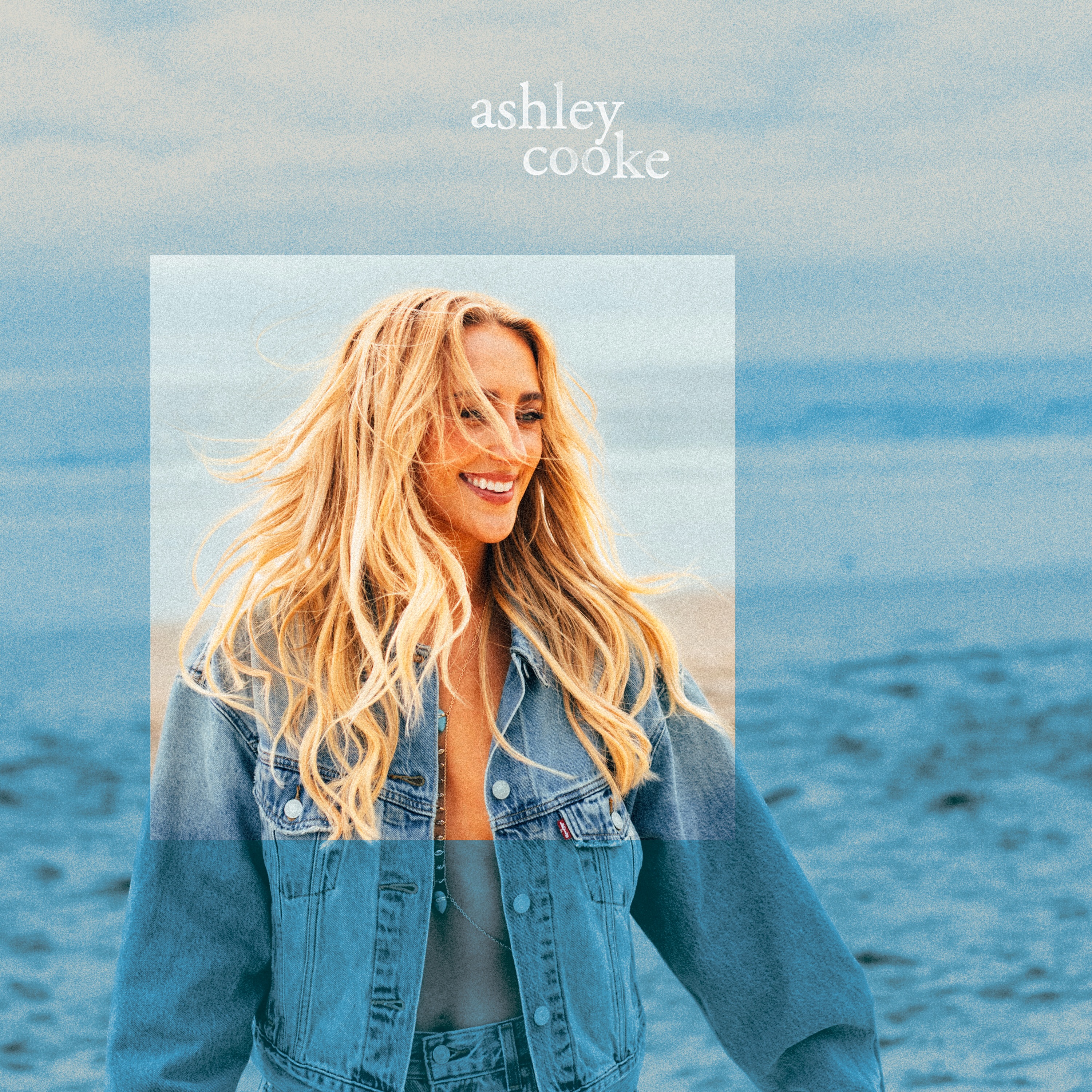
At first glance, Ashley Cooke’s “johnny ‘n june” appears to announce itself as another country song in conversation with one of the genre’s most mythologized love stories. The title naturally points toward Johnny Cash and June Carter, whose names have long functioned as shorthand for devotion, fire, and a romance big enough to become folklore. Cooke, however, takes that expectation and quietly turns it inside out. Her “Johnny” is not Cash, and “June” is not Carter. It is a person and a month, a man and a season, a memory that refuses to fade simply because time has passed.
Released on July 24, 2026, as a preview of Cooke’s self-titled sophomore album, “johnny ‘n june” deepens the singer’s reputation for pairing radio-ready country craft with emotionally specific storytelling. Written by Cooke alongside Lauren Hungate, Emily Weisband, and Will Weatherly, the song is produced by Dann Huff, with Weatherly also serving as vocal producer. That creative lineup matters: the track has the polish expected from a major Nashville release, but its strongest asset is its intimacy. Rather than crowding the song with spectacle, the production leaves Cooke room to sound as if she is still sorting through the memory in real time.
The song’s brilliance lies in how deliberately it resists over-explaining itself. Cooke opens with details that feel lived-in rather than decorative: “Cinnamon zyn on a 4Runner drive,” cheap wine, a back porch, a thunderstorm rolling in, summer rain still lingering on someone’s lips. These images are small, contemporary, and tactile, the kind of fragments that outlast the larger story. In another writer’s hands, the lyric might have leaned too heavily on the cleverness of the title. Here, the title becomes the emotional reveal, a phrase that gathers meaning as the song moves through the months and proves how stubborn memory can be.
Structurally, “johnny ‘n june” is built around the failure of the calendar to heal what the heart keeps replaying. The narrator believes she might be “good by the end of July,” only to find September, November, and December passing without relief. Then come other people: a friend in February who imagines marriage, a “mama’s boy” in August who might be perfectly fine on paper. But each new possibility only sharpens the absence of the original spark. The progression gives the song its aching realism. Cooke is not simply mourning a breakup; she is mourning a connection that was intense enough to rearrange her expectations, yet undefined enough to make her feel foolish for still grieving it.
That emotional contradiction is where Cooke is most persuasive. Modern country has no shortage of songs about lost summer love, but “johnny ‘n june” distinguishes itself by lingering in the gray area between romance and almost-romance. The line “We never were official / I think that makes it worse” is the song’s quiet thesis. There is no clean anniversary to mourn, no formal ending to narrate, no shared label to justify the scale of the hurt. Cooke captures the strange humiliation of missing someone who may not fit neatly into the category of ex, and she does so without undercutting the feeling. The song validates that grief by refusing to make it tidy.
Cooke’s vocal performance is central to that restraint. She does not oversing the heartbreak or push the chorus into melodrama. Instead, she lets phrases loosen at the edges, carrying the fatigue of someone tired of circling the same memory but not yet ready to let it go. Huff’s production supports that choice with a melancholy country sheen: warm, clean, and spacious enough for the lyric’s images to breathe. Weatherly’s vocal production keeps Cooke close to the listener, emphasizing the conversational ache in her delivery rather than smoothing away its vulnerability.
The final stretch elevates the song from nostalgic recollection to existential worry. “Why did it end, Will I ever feel that again” is a deceptively simple question, but in Cooke’s hands it becomes the emotional cliff edge of the track. The closing thought; “They say lightning don’t strike twice, I’ll be lookin’ my whole life, for somethin’ that makes me feel alive like, Johnny ‘n June” — reframes the entire song as a fear of scarcity. The narrator is not just thinking about Johnny; she is wondering whether the version of herself who felt that alive is gone with him.
As a single, “johnny ‘n june” works because it balances instant accessibility with emotional aftertaste. The hook is memorable, the title is clever, and the melody sits comfortably within contemporary country’s polished lane. Yet what lingers most is the specificity: the sand-in-a-suitcase metaphor, the months that keep arriving too soon, the rearview image of green eyes that continue to burn long after the drive has ended. Cooke understands that heartbreak often survives not as a dramatic scene, but as a collection of sensory evidence the body refuses to discard.
“johnny ‘n june” is one of Ashley Cooke’s most evocative releases, a finely written and confidently performed country ballad that turns a familiar cultural reference into something unexpectedly personal. It is professional, polished, and emotionally direct without feeling blunt. More importantly, it suggests that Cooke’s self-titled sophomore album may be interested not just in love stories, but in the private myths people build around the almost-loves they cannot stop revisiting.
(Review Written By: David Pierce)
Latest Updates
- Single Review: Stephen Wilson, Jr. - "Exorcisms On The Weekend"
- Single Review: Stephen Wilson, Jr. - "yellow brick home"
- #throwbackthursday: Miranda Lambert - "More Like Her"
- Single Review: Erin Kirby feat. Ryan Hurd - “Nothing is Everything”
- Single Review: Chloe Graham - “Honky Tonk Honey”
- Single Review: Dylan Marlowe - “Rock The Jukebox”
- Single Review: Caylee Hammack & Trisha Yearwood - “Coldest Shoulder”
- Single Review: Randy Travis - “I Know Where I’d Be Without You”
- Single Review: Riley Green & Peyton Manning - “Alabama Vs. Tennessee”
- Single Review: Hudson Westbrook - “Thin Ice”
- Single Review: Ashley Cooke - “Wrapped”
- Music Video: CJ Solar & the Old Souls - "First Time Caller"
- Single Review: Cody Johnson & Jay Buchanan - "Rabbit Gets A Gun"
- Music Video: Cole Goodwin - "Closer Every Day"
- Music Video: Tyler Nance - "Somethin With You"
- Music Video: William Beckmann - "You Only Love To Break My Heart"
- Lyric Video: CJ Solar & the Old Souls - “Blame It On Me”
- Music Video: Jade Eagleson and Midland - "Coming Soon To A Honky Tonk Near You"
- Visualizer: Colin Lynch - "In Due Time"
- Music Video: The Band Loula - "Other People"