
COLE SWINDELL - "Girl Dad" - Warner Records Nashville
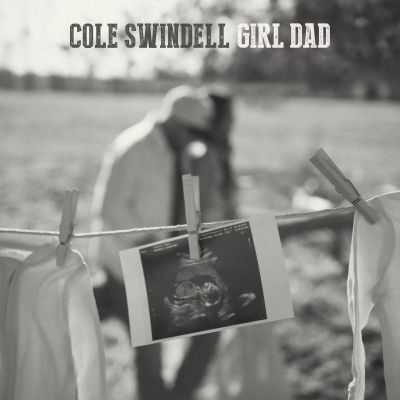
With “Girl Dad,” Cole Swindell returns to one of the most personal emotional spaces in his catalog: grief, memory, and the milestones we wish we could share with the people we have lost. Released June 19, 2026, via Warner Records Nashville, the song is written by Swindell, Ben Stennis, and Michael Tyler, and produced by Sam Ellis. It arrives as a heartfelt continuation of the story Swindell began with his 2015 hit “You Should Be Here,” once again addressing his late father while tracing how much life has changed in the years since.
“Girl Dad” is a conversation that can never receive an answer. Swindell frames the lyric as a visit to his father’s gravesite, where he brings the updates he cannot deliver by phone: he fell in love, got married in California, saved a chair and a drink in his father’s honor, and is now preparing to welcome a daughter. That structure gives the song its quiet power. Rather than leaning on grand declarations, it finds its emotions in ordinary details; a gravel path, an empty chair, a sonogram, a wish for one more in-person conversation.
The title itself works on two levels. “Girl Dad” is a simple label for Swindell’s new chapter as a father, but the phrase also becomes a double address: he is telling his dad that he is having a girl. That turn of language is the song’s most effective device, allowing joy and grief to occupy the same line without either feeling forced.
Swindell has long understood how to write country songs that feel conversational without becoming plainspoken to a fault. “You Should Be Here” captured the ache of a missing parent in the middle of a major life moment; “Girl Dad” extends that idea with a decade’s worth of lived experience behind it. The grief is still present, but it has changed shape. Instead of asking only why his father is gone, Swindell now measures the absence against marriage, fatherhood, and the family traditions his daughter will know only through stories.
That evolution gives the song maturity. It does not simply repeat the emotional formula of the earlier hit; it deepens it. The image of Swindell wishing his father could teach his daughter how to fish is especially affecting because it shifts the focus from what Swindell lost to what his child will inherit indirectly. The song understands that grief is not static; it reappears at weddings, births, birthdays, and moments when love creates a new reason to miss someone.
Produced by Sam Ellis, “Girl Dad” is arranged with restraint, giving Swindell’s vocal room to carry the story. The song’s piano-driven foundation and country instrumentation keep the spotlight on the lyric, while touches of guitar, mandolin, bass, programming, and pedal steel add warmth without overwhelming the intimacy. Justin Schipper’s pedal steel contribution helps place the song firmly in country tradition, while the background vocals from Ellis, Tyler, and Swindell gently reinforce the emotional lift of the chorus.
Swindell’s delivery is direct and vulnerable. He does not oversing the heartbreak; instead, he lets the lyric’s plainness do the work. That choice matters. A song this personal could easily tip into melodrama, but “Girl Dad” largely avoids that by sounding less like a performance than a confession. The vocal has the careful steadiness of someone trying to get through an emotional conversation without breaking down.
The strongest country songs often make the highly specific feel widely recognizable, and “Girl Dad” succeeds because its details are unmistakably Swindell’s while its emotions are universal. But beneath those details is a feeling many listeners know well: the ache of wanting to share good news with someone who should have been there for it.
The song also arrives at a moment when fatherhood itself becomes a lens for understanding the past. Swindell is not only remembering his dad; he is beginning to understand him differently. Becoming a parent adds another layer to the loss, turning memory into responsibility and inheritance. “Girl Dad” is moving because it recognizes that a child can bring both healing and fresh heartbreak, sometimes in the very same breath.
“Girl Dad” is one of Cole Swindell’s most affecting releases because it treats sentiment with sincerity. As a sequel of spirit to “You Should Be Here,” it revisits familiar emotional ground while giving it a new purpose: honoring the father he lost while embracing the daughter who has changed his life. The result is a tender, deeply personal country ballad about love, legacy, and the conversations we keep having with the people who shaped us.
(Review Written By: Dave Pierce)
Latest Updates
- #throwbackthursday: Heidi Newfield - "Johnny And June"
- Single Review: Owen Riegling - "Me Without My Hometown"
- Performance Video: Wyatt Flores - "Runnin' On E" (Live at Spotify House)
- Music Video: Avery Anna - "Blood Runs Thicker"
- Music Video: Carly Pearce & Riley Green - "If I Don't Leave I'm Gonna Stay"
- Visualizer: LOCASH - "Talkin Bout"
- Single Review: Graham Barham - "LEAVIN'" ft. Wiz Khalifa
- Single Review: Kenny Whitmire - “Woman To Blame”
- Single Review: Treaty Oak Revival & Wade Forster - “Can of Worms”
- Single Review: Luke Bryan - “I Liked Loving You”
- Single Review: Tyce Delk - “Up There Down Here”
- Single Review: Darius Rucker - “I Believe”
- Single Review: Sierra Ferrell - “Pair of Dice”
- Single Review: Eric Church - “On The Road”
- Single Review: Thelma & James - "The Way That It Wasn’t"
- Single Review: Waylon Wyatt and Carter Faith - “I’m Sorry But I Love You”
- Single Review: Kassi Ashton - “Chrome Pony”
- Single Review: Kameron Marlowe - “I Won’t”
- Single Review: Justin Moore - “Missing You Night”
- Single Review: Hudson Westbrook - “The Joker”